Master Data Pallet Types
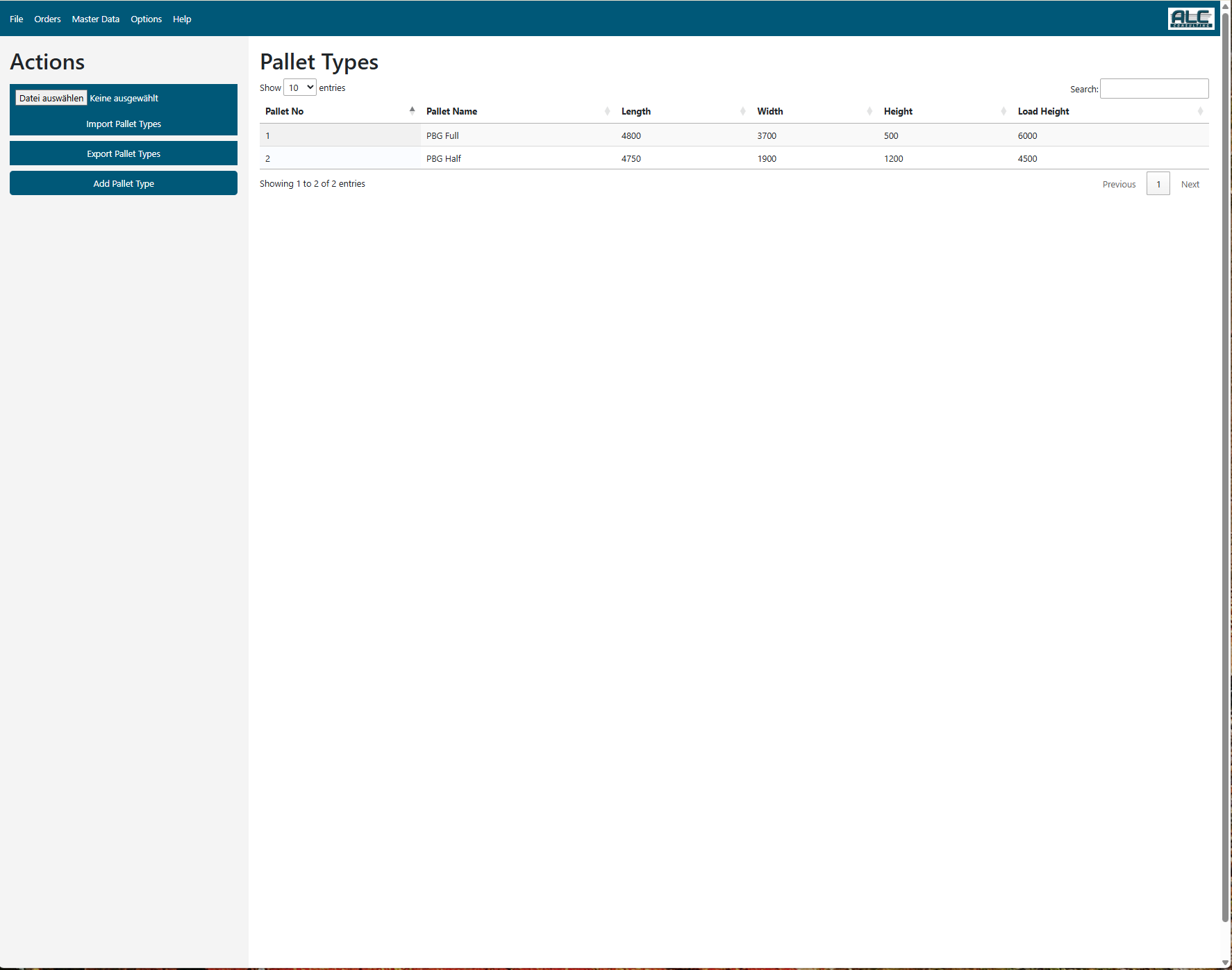
The Pallet Type Master page allows you to view, create, edit, import, and delete pallet types.
For every Package Type and Pallet Type, one or more Layer Patterns must be defined. Depending on the customer's requirements, different pallet types will be used during palletizing.
The core parameters of a pallet type are:
| Parameter | Description |
|---|---|
| Pallet No | Unique identifier of the pallet type |
| External ID | Identifier used by the external palletizing machine |
| Pallet Name | Name of the pallet type |
| Length | Length of the pallet in inches |
| Width | Width of the pallet in inches |
| Height | Height of the empty pallet itself in inches |
| Load Height | Maximum height available for stacking units onto the pallet, in inches |
The following examples show different pallet type visualisations:
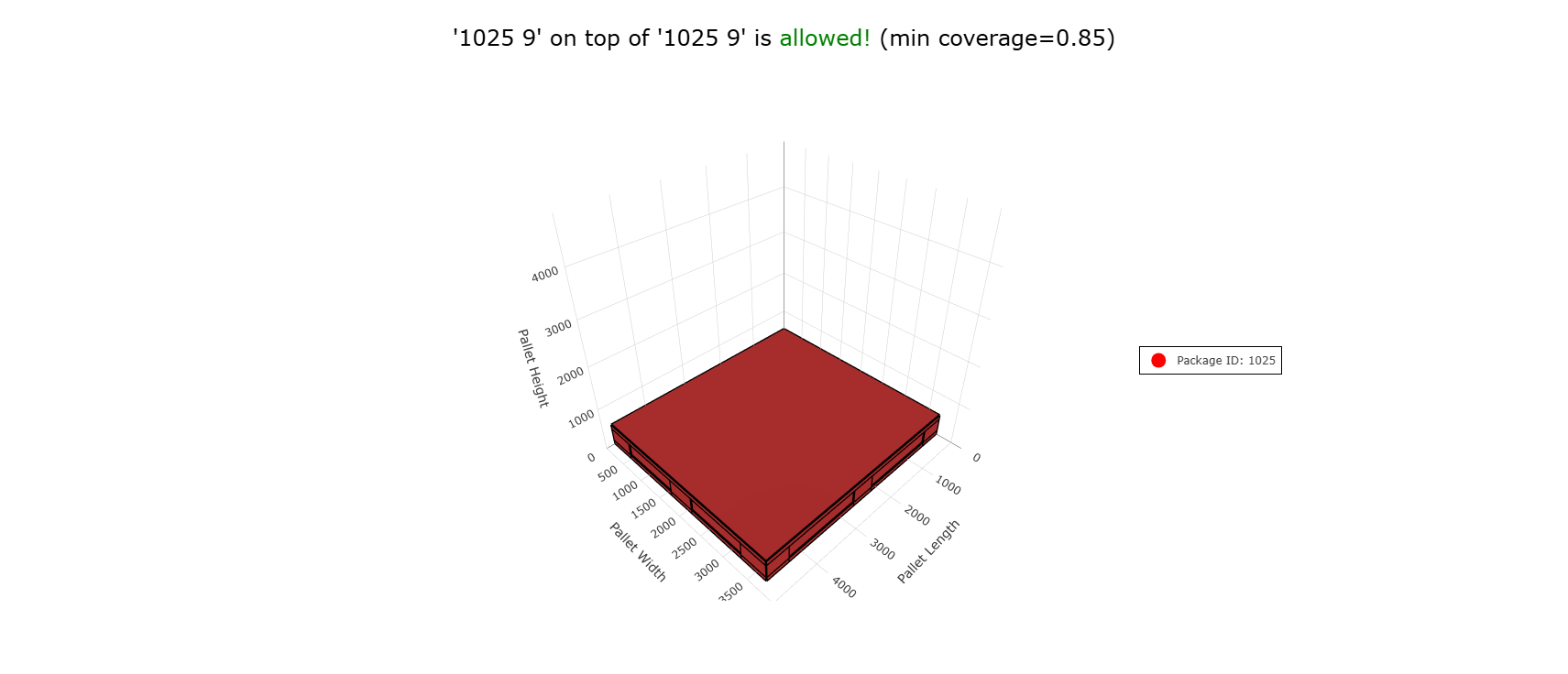 Pallet Type 1: Large Pallet |
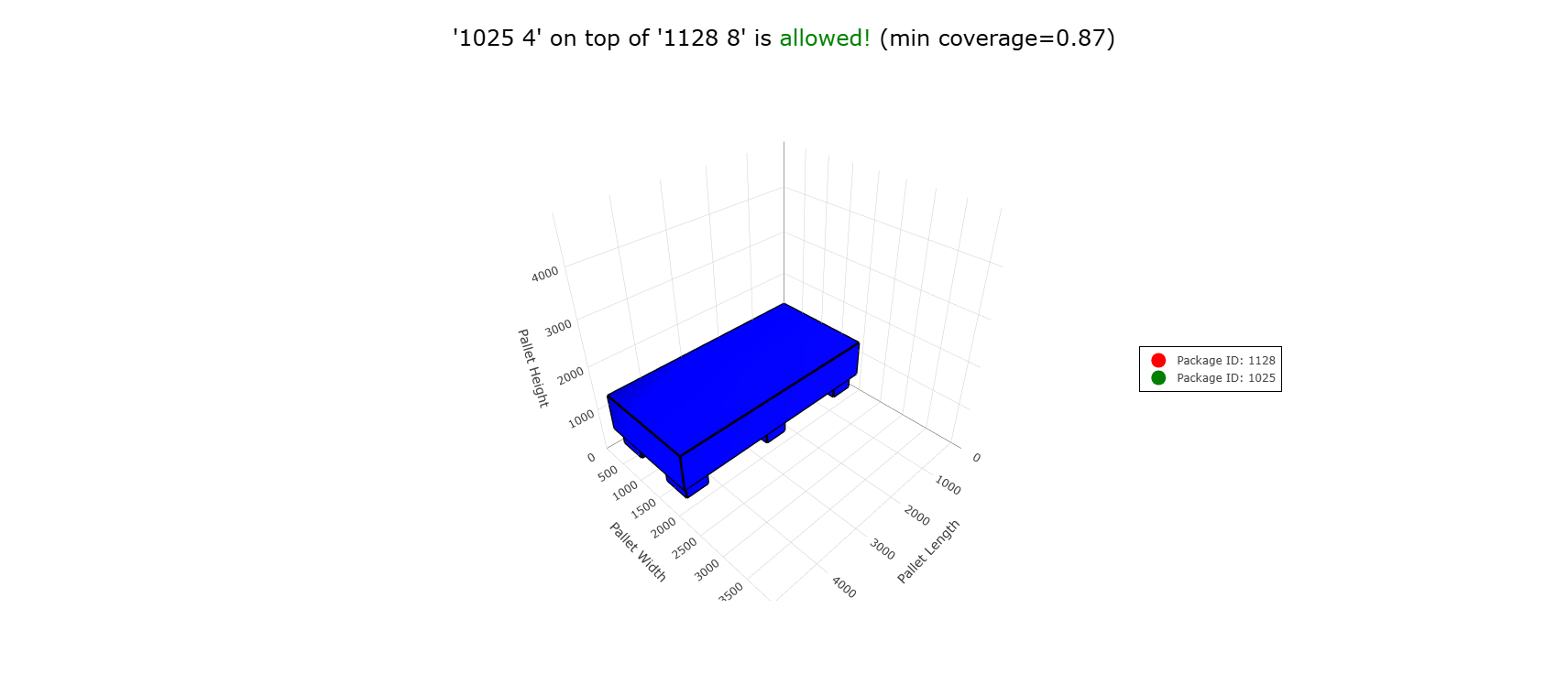 Pallet Type 2: Half Pallet |
Pallet Type Table

By clicking any row in the table, the selected pallet type is rendered as an interactive 3D visualisation below the table.
| Column | Description |
|---|---|
| Pallet No | Unique pallet identifier |
| External ID | ID used by the external palletizing machine |
| Pallet Name | Pallet name |
| Length (in) | Pallet length in inches |
| Width (in) | Pallet width in inches |
| Height (in) | Empty pallet height in inches |
| Load Height (in) | Maximum stackable height in inches |
| Show ... entries | Change this value to display more or fewer records in the table |
| Search | Filter the list by typing any string into this field |
| Showing x to y of z | Indicates which part of the (filtered) list is currently displayed |
| Previous / Next | Page through the list. The current position is shown as "Page n of m" |
Context Sensitive Menu
With a right-click on any row the following context menu will pop up:

| Menu Item | Description |
|---|---|
| Edit | Opens the Edit Pallet Type dialog to change the values of the selected entry |
| Delete | Permanently deletes the selected pallet type after confirmation |
Add Pallet Type
A new pallet type can be added via the Add Pallet Type button in the action bar at the top of the page.
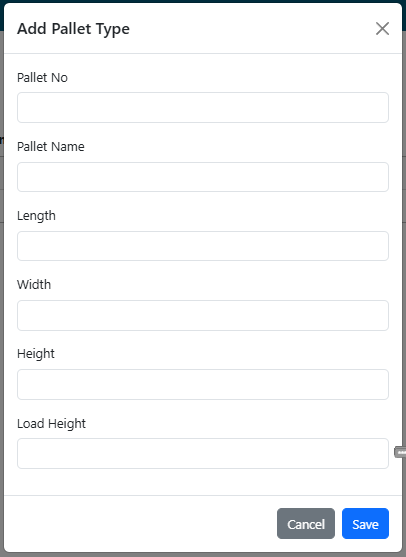
| Field | Description |
|---|---|
| Pallet No | Unique pallet identifier |
| External ID | Identifier used by the external palletizing machine (optional) |
| Pallet Name | Pallet name |
| Length (in) | Pallet length in inches |
| Width (in) | Pallet width in inches |
| Height (in) | Empty pallet height in inches |
| Load Height (in) | Maximum stackable height in inches |
Confirm with Save or abort with Cancel.
Edit Pallet Type
An existing pallet type can be modified via right-click → Edit in the table, or by double-clicking the corresponding table row.
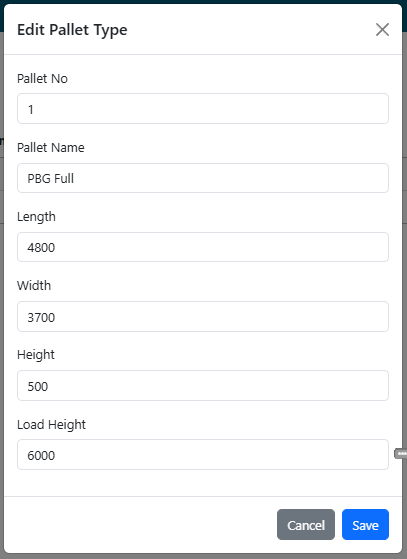
| Field | Description |
|---|---|
| Pallet No | Unique pallet identifier (should not be changed) |
| External ID | Identifier used by the external palletizing machine (optional) |
| Pallet Name | Pallet name |
| Length (in) | Pallet length in inches |
| Width (in) | Pallet width in inches |
| Height (in) | Empty pallet height in inches |
| Load Height (in) | Maximum stackable height in inches |
Confirm with Save or abort with Cancel.
Actions
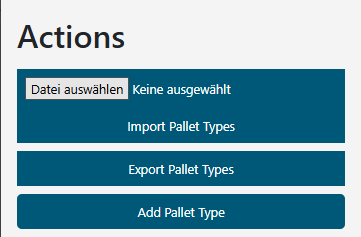
The action bar above the table contains the following controls:
| Control | Description |
|---|---|
| File input | Select an Excel file (.xlsx) to be imported |
| Delete existing data before import | If this switch is enabled, all existing records are deleted before the file is imported. A confirmation dialog must be acknowledged. If the import fails, the previous data is restored automatically. If the switch is off, the imported records are added to / merged with the existing data |
| Import Pallet Type Master | Imports pallet types from the selected Excel file |
| Export Pallet Type Master | Creates an Excel file with all stored pallet types and provides it as download |
| Add Pallet Type | Opens the Add Pallet Type dialog to create a new pallet type |
Note: The Import, Add Pallet Type, Edit, and Delete functions are only available to users with the Editor or Administrator role. Users with read-only access see these controls greyed out and disabled ("Edit permission required").